In the whirlwind of modern life, where every minute counts, wouldn’t it be wonderful to enjoy perfectly cooked eggs without the traditional fuss? Imagine a kitchen where you can achieve flawless hard-boiled eggs with minimal effort and in a fraction of the time. This isn’t a dream; it’s the reality offered by the humble yet revolutionary microwave hard boiled egg cooker. This ingenious gadget has transformed breakfast routines, snack preparations, and meal prepping, offering a level of convenience and consistency that’s hard to beat. If you’re tired of cracked shells, green yolks, or the constant vigil over a boiling pot, welcome to the world of microwave egg cooking.
|
Our Picks for the Best Egg Cooker in 2026
As an Amazon Associate I earn from qualifying purchases.
|
||
| Num | Product | Action |
|---|---|---|
| 1 | Evoloop Rapid Egg Cooker Electric 6 Eggs Capacity, Soft, Medium, Hard Boiled, Poacher, Omelet Maker Egg Poacher With Auto Shut-Off, BPA Free |

|
| 2 | Evoloop Rapid Egg Cooker Electric 6 Eggs Capacity, Soft, Medium, Hard Boiled, Poacher, Omelet Maker Egg Poacher With Auto Shut-Off, BPA Free |
|
| 3 | Elite Gourmet EGC115B Easy Egg Cooker Electric 7-Egg Capacity, Soft, Medium, Hard-Boiled Egg Cooker with Auto Shut-Off, Measuring Cup Included, BPA Free, Classic Black |
|
| 4 | DASH Electric Rapid Egg Cooker for Hard Boiled/Poached/Scrambled Eggs or Omelets with Auto Shut-Off Feature, Black, 7 Egg Capacity |
|
| 5 | Elite Gourmet EGC1215B Easy Egg Cooker, Stainless-steel Heating Plate, Two-Tiered, 14-Egg Capacity, Soft, Medium, Hard-Boiled, Auto Shut-Off, Omelets, Poached Eggs, Measuring Cup, Piercing Pin, Black |
|
| 6 | Smart Fried Egg Cooker, Automatic Fried Egg Maker for 6 Features like Sunny Side Up, Over Easy, Fully Cooked & More. Auto Power Off, Alarm, Round Shape, Non Stick Coating |
|
| 7 | Dash Rapid Egg Cooker - Boiler, Poacher & Steamer - Includes Measuring & Recipe Guide - Dishwasher Safe - Holds 7 Eggs, Aqua |
|
| 8 | Hard Boiled Egg Cooker - CACHOO 14-Egg Rapid Stainless Steel Egg Boiler with 30-Min Timer & Auto Shut Off, Compact Electric Vegetable Steamer for Cooking, Dishwasher Safe, Black |
|
| 9 | Elite Gourmet EGC115M Easy Egg Cooker Electric 7-Egg Capacity, Soft, Medium, Hard-Boiled Egg Cooker with Auto Shut-Off, Measuring Cup Included, BPA Free, Retro Mint |
|
| 10 | Elite Gourmet EGC-007B# Rapid Egg Cooker, 7 Easy-To-Peel, Hard, Medium, Soft Boiled Eggs, Poacher, Omelet Maker, Auto Shut-Off, Alarm, 16-Recipe Booklet, Black |
|
What Exactly is a Microwave Hard Boiled Egg Cooker?
At its core, a microwave hard boiled egg cooker is a specialized kitchen tool designed to steam eggs directly in your microwave oven. Unlike traditional boiling, which submerges eggs in water on a stovetop, these devices use a small amount of water to create steam within a sealed, microwave-safe container. This steam gently cooks the eggs to your desired doneness, from soft to perfectly hard-boiled.
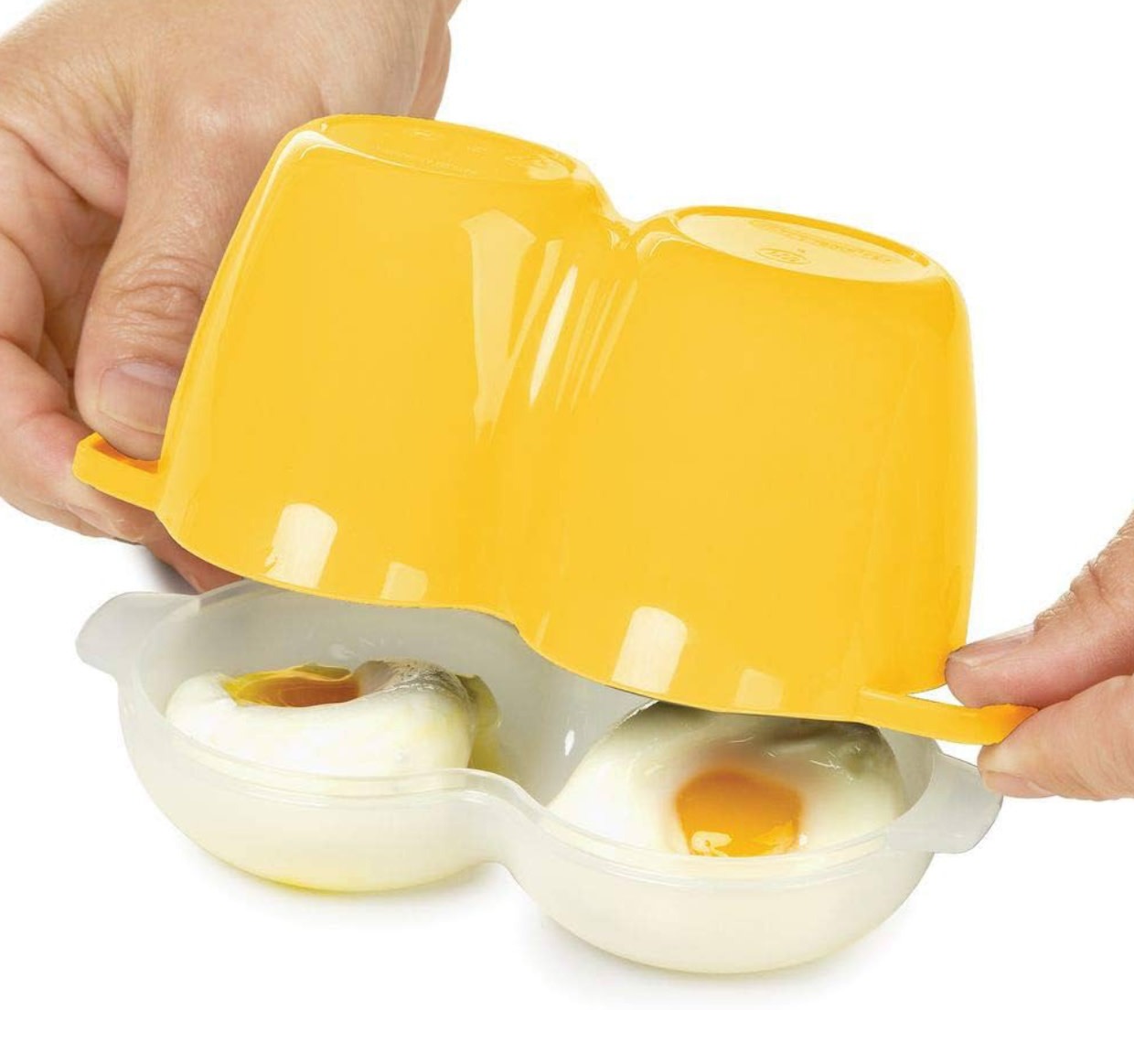
Most models consist of a plastic base with a water reservoir, an internal tray for holding eggs (typically 1 to 4), and a secure lid. Some designs feature an aluminum component that helps with heat distribution, surprisingly safe for microwave use due to its specific engineering within the cooker. This technology simplifies what was once a time-consuming task, making it accessible for even the busiest individuals.
Why Choose a Microwave Egg Cooker? The Undeniable Benefits
The appeal of a microwave hard boiled egg cooker extends far beyond mere novelty. It addresses several common frustrations associated with traditional egg preparation:
- Unmatched Speed: Forget waiting for a large pot of water to boil. A microwave hard boiled egg cooker can deliver perfectly cooked eggs in mere minutes, often 5 to 10 minutes depending on your microwave’s wattage and desired firmness. This speed is a game-changer for rushed mornings or quick protein boosts.
- Effortless Convenience: These cookers offer a “fire-and-forget” approach. Once loaded and set, they require virtually no supervision, freeing you to tackle other tasks. No more hovering over a sputtering pot; your microwave does all the heavy lifting.
- Consistently Easy Peeling: One of the most celebrated advantages is how easily eggs cooked in these devices peel. The steaming method often results in shells that glide off effortlessly, a stark contrast to the often frustrating battle with stovetop-boiled eggs.
- Reliable Results: With a little experimentation to find the perfect timing for your specific microwave and preferences, a microwave hard boiled egg cooker delivers consistent results batch after batch. Say goodbye to guesswork and hello to uniform yolks and whites every time.
- Energy Efficiency: Using a microwave and a small amount of water is generally more energy-efficient than boiling a large pot of water on a stovetop, contributing to a greener kitchen.
“The microwave egg cooker is a testament to innovative kitchen design,” explains Chef Antoine Dubois, a renowned culinary device expert. “It demystifies egg preparation, ensuring even novices can achieve chef-level results, particularly for hard-boiled eggs, without the usual fuss or extended cook times.”
Popular Microwave Egg Cooker Models: What’s Out There?
The market offers a variety of microwave hard boiled egg cooker options, each with its own quirks and features. Brands like Nordic Ware, Collections Etc., and the popular Egg Pod are frequently highlighted for their effectiveness. Most models typically accommodate 1 to 4 eggs, making them ideal for individuals, couples, or small families. When choosing, consider the capacity that fits your needs and look for sturdy, microwave-safe materials. Ensure the lid forms a secure seal to trap steam efficiently, which is crucial for even cooking.
How to Use Your Microwave Hard Boiled Egg Cooker: A Step-by-Step Guide
Using a microwave hard boiled egg cooker is incredibly straightforward, but a few key steps ensure optimal results:
- Add Water: Start by filling the water reservoir in the base of your cooker with the recommended amount of water. For many 4-egg models, this is typically around 1.5 cups, but always check your specific cooker’s instructions.
- Prepare Eggs: Carefully place your eggs into the designated spots on the internal tray. Important safety note: some microwave hard boiled egg cooker models, particularly those that cook eggs in their shells, may recommend piercing a tiny hole in the wider end of each egg with a pin. This helps prevent pressure buildup and potential cracking or “egg-splosions.”
- Secure the Lid: Place the lid securely onto the base. Many cookers have tabs or twists to ensure a tight seal, which is essential for steam retention.
- Microwave: Place the assembled cooker into your microwave oven.
- Set the Timer: This is where personal preference and microwave wattage come into play. General guidelines for hard-boiled eggs in a 1000-watt microwave might be around 8-10 minutes. For soft-boiled, it could be 5-7 minutes. Lower wattage microwaves (e.g., 600-800 watts) will require longer cooking times. Start with the manufacturer’s suggested times and adjust from there.
- Rest and Cool: Once the microwave finishes, do not open immediately. Let the cooker stand in the microwave for 1-2 minutes to allow the residual steam to finish cooking and the internal pressure to subside. Then, carefully remove the cooker (using oven mitts as it will be hot!). Immediately transfer the cooked eggs to an ice bath or run them under cold water for a few seconds. This halts the cooking process, prevents green rings around the yolk, and further aids in easy peeling.
- Peel and Enjoy: Once cooled, your hard-boiled eggs should peel like a dream!
Microwave Egg Cooker Safety: Avoiding the “Egg-splosion”
The concern about eggs exploding in the microwave is valid, and while a properly designed microwave hard boiled egg cooker minimizes this risk, understanding why it happens is crucial for safe operation. Eggs explode due to rapid, uneven heating of the water molecules inside the egg, leading to pressure buildup.
Here are vital safety tips:
- Always Use Water: Never attempt to dry-cook eggs in a microwave egg cooker without the specified amount of water. Water creates the steam needed for gentle, even cooking and prevents dangerous pressure.
- Consider Piercing: If your microwave hard boiled egg cooker’s instructions recommend it, piercing a small hole in the eggshell before cooking is a critical step to allow steam to escape and prevent ruptures.
- Use Microwave-Safe Cookware: Ensure your cooker is explicitly labeled as microwave-safe.
- Avoid Overheating: Stick to recommended cooking times and err on the side of slightly undercooking rather than overcooking, especially when first learning your device.
- Never Microwave Peeled Hard-Boiled Eggs: Reheating a peeled hard-boiled egg in a microwave is highly risky as it can explode once removed, due to trapped superheated water inside the yolk.
- Handle with Care: Always use oven mitts or a towel when removing the hot cooker from the microwave and be mindful of escaping steam when opening the lid.
Traditional Stovetop vs. Microwave Egg Cooker: A Head-to-Head
For years, the stovetop method was the undisputed king of hard-boiled eggs. So, how does the microwave hard boiled egg cooker stack up?
Traditional Stovetop Boiling:
- Pros: Can cook large batches (a dozen or more), simple concept, no special equipment beyond a pot.
- Cons: Requires constant supervision to prevent boiling over, longer cooking times (waiting for water to boil, then cooking), shells can be notoriously difficult to peel, less energy-efficient for small batches.
Microwave Hard Boiled Egg Cooker:
- Pros: Significantly faster, truly hands-off, consistently easy-to-peel eggs, compact for storage, more energy-efficient for small quantities.
- Cons: Limited capacity (typically 1-4 eggs), requires a specific gadget, a small learning curve for ideal timing based on microwave wattage.
For quick, consistent, and easy-to-peel hard-boiled eggs, especially for smaller quantities, the microwave hard boiled egg cooker often takes the crown.
Tips for Perfect Microwave Hard Boiled Eggs
Even with the best microwave hard boiled egg cooker, a few expert tips can elevate your results:
- Know Your Microwave: Microwave wattages vary (e.g., 600W to 1200W). A higher wattage means shorter cooking times. Adjust accordingly.
- Egg Size Matters: Larger eggs (jumbo vs. large) may require an extra 30-60 seconds of cooking.
- Don’t Skip the Ice Bath: The rapid cooling not only prevents a greenish ring around the yolk (caused by a reaction between iron and sulfur) but also contributes significantly to easy peeling.
- Experimentation is Key: The first batch might not be perfect, but a small adjustment in time will help you discover your ideal hard-boiled egg. Keep notes!
Cleaning and Maintenance of Your Egg Cooker
Maintaining your microwave hard boiled egg cooker is usually simple. Most manufacturers recommend hand washing with warm, soapy water. While some plastic components might be dishwasher safe, often the delicate parts or those with aluminum inserts are best kept out of the dishwasher to prevent discoloration, warping, or damage that could compromise its functionality and safety. Always refer to your specific product’s care instructions.
Beyond Hard-Boiled: Versatility of Your Egg Cooker
While our focus is on hard-boiled eggs, many microwave hard boiled egg cooker models are versatile enough to achieve other doneness levels. By simply adjusting the cooking time, you can often prepare soft-boiled eggs with runny yolks or medium-boiled eggs with jammy centers. Some cookers can even be adapted for quick poached eggs or scrambled eggs (though these usually involve cracking the egg directly into the cooker rather than cooking in the shell). This versatility makes the microwave egg cooker a truly valuable tool for any egg lover.
Frequently Asked Questions (FAQ)
Q: Can I put metal in a microwave hard boiled egg cooker?
A: Some microwave egg cookers contain small aluminum parts, like an egg tray. These are specifically designed and tested to be microwave-safe in conjunction with the device’s overall construction. However, you should never put unapproved metal items into your microwave. Always follow the manufacturer’s instructions for your specific egg cooker.
Q: Why do my eggs sometimes explode in the microwave?
A: Eggs can explode in the microwave due to steam and pressure buildup inside the shell or yolk. This is often prevented by piercing the eggshell (if recommended by the cooker’s instructions) and ensuring there is enough water to create steam and dissipate heat evenly. Never dry-cook eggs in the microwave.
Q: How many eggs can I cook at once in a microwave hard boiled egg cooker?
A: Most microwave hard boiled egg cookers are designed for small batches, typically cooking 1 to 4 eggs simultaneously. This makes them ideal for daily use or meal prep for individuals and small families rather than large gatherings.
Q: Is using a microwave hard boiled egg cooker truly faster than stovetop boiling?
A: Yes, absolutely! Microwave egg cookers eliminate the need to wait for a pot of water to come to a rolling boil, significantly reducing overall cooking time. Eggs are often ready in 5-10 minutes, compared to 15-20+ minutes for stovetop methods.
Q: How do I know if my microwave hard boiled eggs are done without cracking them?
A: A simple trick is the “spin test.” If you spin a cooked egg on a flat surface, it will spin rapidly and smoothly. A raw or soft-boiled egg will wobble due to its liquid interior. For hard-boiled eggs, a steady spin indicates doneness.
Conclusion
The microwave hard boiled egg cooker is more than just a convenience gadget; it’s a smart solution for anyone seeking perfectly cooked, easy-to-peel eggs with minimal fuss. From its rapid cooking times to its consistent results and simplified cleanup, it streamlines your kitchen routine, making healthy, protein-rich meals and snacks more accessible than ever. Embrace this modern marvel in your kitchen, experiment with timings to suit your taste, and discover the joy of effortless egg preparation. Your breakfast table (and your schedule!) will thank you for it.